


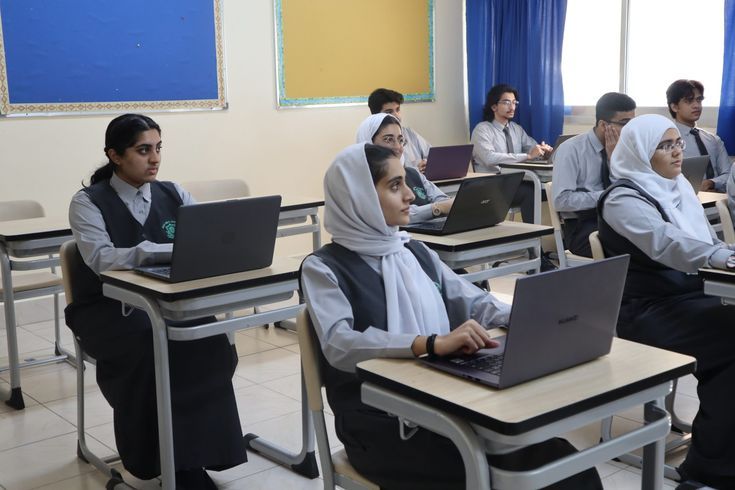
Introduction to Education in the UAE
The education landscape in the UAE schools is a dynamic and rapidly evolving domain that stands as a testament to the country’s commitment to fostering academic excellence and innovation.
Positioned as a global education hub, Abu Dhabi, Dubai, and Sharjah host a myriad of schools that cater to both local and expatriate communities, reflecting a rich tapestry of cultures and educational philosophies.
The UAE education system encompasses a broad spectrum, including K-12 programmes, higher education institutes, technical education, and private institutions.
The emphasis on international schools and bilingual programmes highlights the UAE schools’ dedication to cultivating multilingualism and global citizenship among students.
Government initiatives have prioritised enhancing the educational framework to align with international standards, focusing on integrating technology and modern pedagogical practices.
This dedication is further underscored by various partnerships with prestigious global institutions, facilitating a continuous exchange of best practices and curricular advancements.
For expatriate families, the flexibility offered by international curricula, such as the British and American systems, ensures that students can seamlessly transition back to their home countries or continue their education anywhere in the world.
Efforts to provide specialised education and vocational training further demonstrate the UAE schools’ commitment to inclusivity and the preparation of students for diverse career pathways.
In conclusion, the UAE schools not only aim to deliver world-class education but also to prepare students for the challenges of an increasingly interconnected and complex world.
This focus on personal growth, academic achievement, and life competencies ensures that every student is equipped to thrive both within and beyond the classroom.
Overview of the UAE Education System
The UAE education system is characterised by a dynamic and diverse blend of public and private institutions, and UAE schools play a pivotal role in shaping the future of this fast-developing nation.
Understanding the UAE’s educational landscape offers insight into how the country is preparing its youth for a globalised world.
The Ministry of Education governs the national curriculum for public schools in the UAE, ensuring that the education provided meets the requisite standards.
The curriculum is designed to equip students with skills and knowledge in English, mathematics, science, and technology, which are essential in today’s competitive environment.
One of the defining features of the UAE education system is its emphasis on bilingualism, giving students the opportunity to learn both Arabic and English from an early stage.
This dual-language approach enhances their ability to communicate and engage in international contexts.
In addition, UAE schools are increasingly incorporating modern technology and innovative teaching methods to provide a comprehensive learning experience.
These methods include digital resources and interactive instructional strategies, contributing to the UAE’s vision of fostering a knowledge-based economy.
Higher education in the UAE is anchored by leading institutions such as the United Arab Emirates University, Khalifa University, and Zayed University, which offer a range of undergraduate and graduate programmes.
These universities are committed to research and innovation, further strengthening the academic fabric of the nation.
Moreover, the presence of international universities, including branches of global institutions such as the Sorbonne University and New York University, enriches the academic opportunities available to students in the UAE.
These institutions offer curricula that align with international standards, allowing UAE students to receive world-class education without leaving their homeland.
The diversity in the UAE education system is further reflected in its private and international schools.
These schools cater to expatriate communities and follow various international curricula, such as the British, American, and International Baccalaureate systems.
Private UAE schools provide parents with a variety of educational choices tailored to their children’s needs and future aspirations.
As a hub for cultural exchange and excellence in education, the UAE continues to attract top-tier educators and institutions.
This influx brings a wealth of knowledge and expertise, enhancing the quality of education in the country.
In summary, the UAE education system is vast and varied, offering a range of opportunities for students at all levels.
It is a system that values bilingualism, technological integration, and international collaboration, preparing UAE students to thrive in a global society.
UAE schools, through their rigorous and diverse approaches, are instrumental in shaping the future leaders and innovators of tomorrow.

Types of Schools in the UAE
UAE schools are diverse, offering various educational models to cater to the country’s multicultural populace.
The educational landscape in the United Arab Emirates is characterised by a blend of public and private institutions, along with specialised international schools.
Public schools in the UAE are predominantly attended by Emirati students and follow the curriculum set by the Ministry of Education.
These schools focus on a broad range of subjects, with an emphasis on Arabic language and Islamic studies, ensuring that students are well-versed in the country’s cultural and religious heritage.
In contrast, private schools in the UAE serve both local and expatriate communities, offering a plethora of global curricula.
Among the popular choices are the British, American, and International Baccalaureate (IB) programmes, which provide students with internationally recognised qualifications.
The UAE is home to numerous British schools, known for their rigorous academic standards and focus on holistic development.
These institutions follow the National Curriculum of England, preparing students for GCSEs and A-Levels.
American curriculum schools are also prevalent, with a focus on broad-based education that encourages critical thinking and creativity.
These schools typically lead students toward the Advanced Placement (AP) exams or a High School Diploma recognised by US institutions.
International Baccalaureate schools are gaining popularity for their emphasis on fostering independent learning and an international mindset.
The IB curriculum is particularly suited for those seeking a globally-minded education and offers qualifications such as the IB Diploma.
In addition to these, the UAE hosts schools with distinct national curricula, including Indian, French, and German programmes.
These cater to expat communities, ensuring students maintain their home country’s educational standards while adapting to the UAE environment.
Specialised schools offering technical and vocational education are also available, providing practical skills and training in various trades and technologies.
These institutions are crucial in aligning with the UAE’s vision to enhance workforce capabilities and diversify its economy.
The diversity of UAE schools reflects the country’s commitment to providing flexible and world-class education options.
This ensures that students from different backgrounds can find institutions that meet their cultural, linguistic, and academic needs while preparing them for future global opportunities.
Private and International Schools
UAE schools encompass a diverse range of private and international institutions, reflecting the country’s commitment to offering world-class education.
The prevalence of private and international schools in the UAE is indicative of its multicultural population and the demand for varied curricula.
These UAE schools provide a plethora of educational programmes that cater to both expatriate and Emirati families.
Private schools in the UAE often follow international curricula, including the British, American, and International Baccalaureate (IB) systems.
This range of options allows students to receive education analogous to global standards, thus opening pathways to prestigious universities worldwide.
In cities such as Dubai and Abu Dhabi, the density of international schools is particularly high, attracting families looking for a specific curriculum.
The KHDA (Knowledge and Human Development Authority) in Dubai meticulously regulates private education to ensure quality and adherence to educational standards.
International schools in the UAE not only deliver diverse curricula but also emphasise multilingualism, preparing students for a globalised future.
The fees for these private and international institutions can vary significantly, which might represent a financial consideration for families.
Despite the costs, enrollment in such schools continues to grow, highlighting the focus on quality education in the region.
Moreover, UAE schools frequently incorporate state-of-the-art technology and modern teaching methodologies, aligning with global educational trends.
The inclusion of extracurricular programmes in these schools enhances the holistic development of students, nurturing intellectual and personal growth.
Many private schools also foster partnerships with international educational bodies, creating opportunities for student exchanges and collaborative projects.
These strategic collaborations further enhance the international recognition of UAE schools, elevating their status on a global scale.
In summary, private and international schools in the UAE play a pivotal role in the educational landscape, offering a wealth of opportunities that align with global ambitions and standards.
Higher Education Institutions
The landscape of *higher education institutions* in the UAE is notably diverse, mirroring the multicultural composition of UAE schools and the broader Emirati society.
UAE schools often serve as a gateway to numerous universities that cater to both local and international students.
This network of higher education options underlines the commitment of the UAE to be a global educational hub.
Major universities like Khalifa University, UAE University, and Zayed University, as well as branches of international institutions such as Sorbonne University Abu Dhabi and NYU Abu Dhabi, contribute significantly to this objective.
These institutions offer a wide array of programmes across disciplines, including engineering, management, science, technology, arts, and humanities.
The curricula are designed to meet international standards, and many programmes are taught in English, making them attractive to a global audience.
Additionally, the UAE government has consistently prioritised higher education and invested in advanced facilities, research grants, and international partnerships to enhance the quality of education.
Vocational and technical education is also a significant focus, with institutes like the Higher Colleges of Technology offering specialised courses aimed at meeting the needs of the UAE’s growing economy.
These programmes are well aligned with the UAE’s Vision 2021, which emphasises development in areas like renewable energy, information technology, and advanced science.
Moreover, higher education institutions in the UAE actively engage in global research initiatives, and collaborations are encouraged.
Such partnerships are essential for developing a robust research landscape and enhancing academic innovation within the country.
There is a strong emphasis on creating a student-friendly environment, with campuses providing state-of-the-art facilities, libraries, and extracurricular activities to enrich the educational experience.
The growth of higher education institutions in the UAE reflects the country’s strategic focus on becoming a knowledge economy and preparing students to compete in an increasingly globalised world.
These efforts ensure that graduates are well-prepared for the challenges of the modern workforce and can significantly contribute to the UAE’s future development.
Special Education and Technical Training
Special education and technical training are pivotal components of the educational landscape within UAE schools.
In a bid to ensure inclusivity and skill development, the UAE has established a comprehensive system that caters to diverse learning needs and vocational aspirations.
The UAE government has made significant strides in integrating special education into the mainstream education system.
This initiative focuses on creating an environment where students with disabilities can receive tailored instruction that meets their individual needs.
UAE schools are equipped with specialised educators and resources designed to support students with physical, intellectual, or emotional challenges.
The commitment to special education is evident in policies that stipulate equal access to quality education for all students, reflecting global standards and practices.
In addition to special education, UAE schools are expanding their focus on technical training.
Technical education in the UAE aims to prepare students for the demands of an evolving job market.
By offering vocational programs, UAE schools provide students with the opportunity to acquire practical skills and industry-relevant expertise.
Technical training is not limited to secondary education; several higher education institutions in the UAE also offer advanced vocational courses.
These programs are designed in collaboration with industry partners to ensure that graduates are equipped with skills that match market needs.
The emphasis on both special education and technical training underscores the UAE’s dedication to developing a well-rounded educational system.
This approach not only supports individual learning paths but also contributes to the nation’s goal of fostering a skilled, diverse workforce.
In summary, UAE schools are committed to advancing special education and technical training as essential elements of their educational offerings.
This focus aligns with the broader vision of nurturing all students and preparing them for a dynamic future.
Bullying and Student Well-Being
Addressing bullying and student well-being in UAE schools is a crucial aspect that educators and policymakers must focus on to foster a safe and supportive learning environment.
In the diverse educational landscape of UAE schools, promoting the well-being of students is paramount.
Bullying, whether physical, verbal, or cyber, can significantly impact a student’s psychological and emotional health, leading to detrimental effects on their academic performance and social skills.
Research indicates that bullying in UAE environments can lead to increased levels of anxiety and depression among students, affecting their overall experience and engagement in education.
To combat bullying, UAE schools often implement comprehensive prevention programs, which may include awareness campaigns that promote empathy, encourage open communication, and empower students to report incidents without fear of retaliation.
Incorporating social and emotional learning (SEL) into the curriculum is another approach used to improve student well-being, teaching children essential life skills such as resilience, empathy, and conflict resolution.
Additionally, having a dedicated support system, such as school counsellors and mental health professionals, is vital in addressing the needs of students who may be victims of bullying or displaying behavioural issues.
These professionals work closely with teachers and parents to provide personalised interventions and support strategies that cater to the unique needs of each student.
The commitment of UAE schools to enhance student well-being is not only beneficial for the individual but also contributes to a positive school culture and community.
By continuously striving to create a safe and nurturing environment, UAE schools ensure that all students have the opportunity to learn, thrive, and achieve their full potential in a setting that respects their emotional and social health.
Global Partnerships and International Opportunities
In the ever-evolving educational landscape of the UAE, global partnerships and international opportunities significantly enhance the learning environment in UAE schools.
Such collaborations serve as a conduit for cultural exchange and academic advancement, allowing students and educators to benefit from a diverse range of perspectives and experiences.
UAE schools actively engage in partnerships with international educational institutions, fostering an environment where ideas, best practices, and innovations are shared widely.
These alliances are instrumental in advancing the UAE’s national educational strategy, which emphasises academic excellence and competitiveness on a global scale.
Through programmes like student exchanges and collaborative research initiatives, UAE schools offer their students unique opportunities to experience different academic systems and cultures.
This exposure is invaluable in preparing students for the globalised workforce, equipping them with the skills and mindset necessary to thrive in diverse international settings.
Furthermore, these global partnerships bolster the UAE’s educational reputation, positioning it as a leader in embracing international standards and curricula.
In addition to enhancing academic learning, these opportunities promote cultural understanding and empathy among students, critical in today’s interconnected world.
By leveraging international collaborations, UAE schools not only elevate their educational offerings but also contribute to cultivating global citizens ready to tackle future challenges.
Future of Education in the UAE
The future of education in UAE schools is undergoing a significant transformation, driven by a vision for innovative learning and global competitiveness.
Education in the UAE is poised to incorporate advanced technologies, including artificial intelligence and machine learning, to enhance the learning experience.
UAE schools are increasingly focusing on personalised learning paths to cater to the diverse needs of students, ensuring that every child can optimise their potential.
In the coming years, we anticipate that the UAE will expand its focus on STEM education, preparing students to thrive in fields such as science, technology, engineering, and mathematics.
To keep pace with global trends, UAE schools are also expected to place a greater emphasis on bilingualism and multilingualism, with proficiency in languages like English and Arabic being paramount.
Additionally, the importance of sustainability and environmental education is on the rise as UAE schools strive to produce socially responsible and environmentally aware citizens.
The UAE government is investing heavily in state-of-the-art facilities and educational technologies that will shape the future landscape of education.
The integration of vocational training with academic curricula is also expected, providing students with practical skills that align with industry demands.
This strategic approach aims to ensure that graduates from UAE schools are well-equipped to enter the workforce with the skills and knowledge required for the future.
As a result, educational institutions like Lady Evelyn Independent School are aligning their program offerings to reflect these future-oriented goals.
Overall, the future of education in the UAE is set to be dynamic, inclusive, and geared towards producing globally competent individuals ready to tackle future challenges.
Conclusion
The landscape of UAE schools is diverse and continually evolving, reflecting the country’s commitment to providing quality education.
By integrating modern technology, global partnerships, and a broad range of curricula, the UAE schools aim to nurture well-rounded individuals equipped for the future.
The focus on academic excellence, combined with efforts to improve student well-being and inclusivity, positions UAE schools as leaders in the global educational arena.
As an institution dedicated to fostering academic and personal growth, Lady Evelyn Independent School aligns with the principles driving educational success in the region.
Emphasising these strengths not only benefits our students but also enhances the overall educational framework within the UAE.
By harnessing these elements, we are confident that our contribution will continue to be a beacon of educational excellence, further elevating the standard of UAE schools.